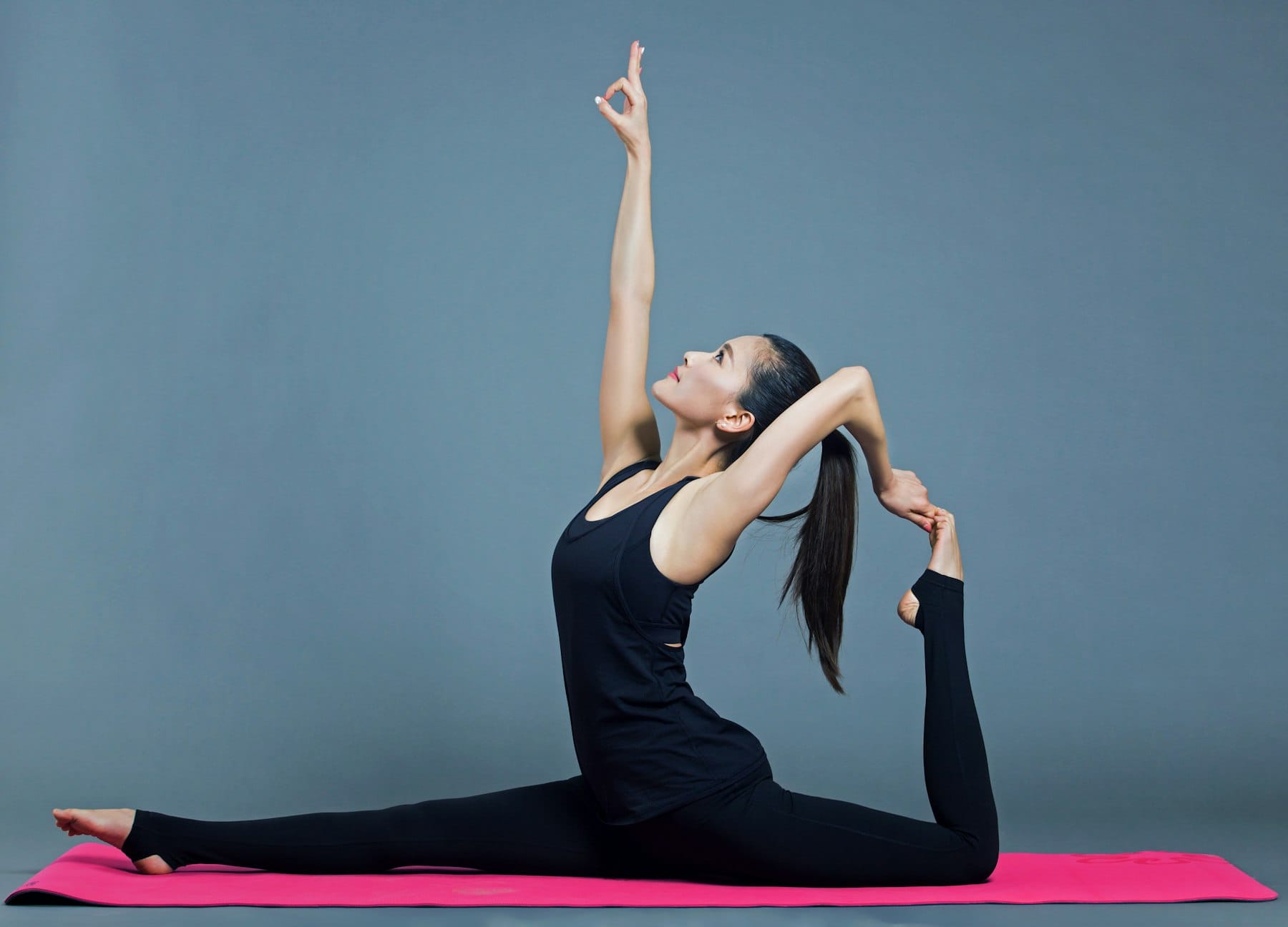
Hips are where a lot of us store the day. Hours of sitting, commuting, running or simply standing still tend to leave the front of the hips short and the outer hips tight. A slow hip-opening sequence is one of the simplest ways to give that area some attention, and it becomes far more enjoyable when you pair it with the right kind of music.
This guide gives you a 20–25 minute home sequence built around slow, steady electronic music. You don’t need experience, only a mat, a couple of cushions and a quiet corner.
Why slow music suits hip openers
Hip-opening poses are not about pushing. Most of them work best when you settle in, breathe, and let gravity do the job over time. Fast, busy tracks tend to pull you into effort; slower music tends to invite you to stay.
Downtempo and ambient pieces, usually somewhere around 60–90 BPM or without a clear beat at all, give you a pulse that is close to a calm breathing rhythm. Instead of counting seconds, you can hold a pose “for one long build” or “until the pad changes”. If you want to explore the genre, our guide to the best electronic music for yoga is a good starting point.
Before you start
- Practise on an empty stomach or a couple of hours after a big meal.
- Keep a cushion or folded blanket nearby to sit on or support your knees.
- Warm the body first: a few minutes of walking, gentle twists or cat-cow.
- Move slowly in and out of each pose; the transitions matter as much as the holds.
- Stay in a range where you can breathe smoothly. Sharp or pinching sensations, especially in the knees, are a sign to back off or skip the pose.
If you have an injury or any doubt, check with a qualified professional before trying new positions.
The sequence (20–25 minutes)
Choose a playlist that starts slightly warmer and gets softer as you go. Let one or two tracks roughly match each block below.
1. Arrival (2–3 minutes). Sit cross-legged on a cushion. Close your eyes and simply listen. Lengthen your exhale a little. If you’d like a structured warm-up for the breath, try our 10-minute breathing practice with music first.
2. Cat-cow and hip circles (2–3 minutes). On hands and knees, move the spine with the breath, then draw slow circles with the hips in both directions. Follow the groove rather than a count.
3. Low lunge (2 minutes per side). Step one foot forward, lower the back knee onto a cushion and shift the hips gently forward. This targets the front of the hip, which tends to get short from sitting. Keep the front knee roughly over the ankle.
4. Lizard variation (1–2 minutes per side). From the lunge, bring both hands to the inside of the front foot. Stay on your hands or come down to blocks or forearms. Let the hips sink slowly with each exhale.
5. Butterfly (3 minutes). Sit with the soles of the feet together and knees falling open. Place cushions under the knees if they float high. Fold forward only as far as feels comfortable, letting the head be heavy.
6. Figure four on the back (2 minutes per side). Lie down, cross one ankle over the opposite knee and draw the legs towards you. This is a gentler alternative to pigeon pose and works into the outer hip.
7. Happy baby or a supported squat (1–2 minutes). Either lie on your back and hold the feet, or sit in a low squat with a cushion under the heels. Rock slightly from side to side.
8. Rest (3–5 minutes). Lie flat with a cushion under the knees. Let the last track play out completely before you move.
How to use the music during holds
Long holds can feel restless at first. A few ideas that tend to help:
- Breathe with the phrase. Many electronic tracks move in clear 8- or 16-bar phrases. Try one breath cycle per phrase change.
- Listen for one layer. Pick a single sound, a bassline or a pad, and follow it through the hold.
- Let the drops be cues. When the beat drops out, soften one more notch. When it returns, check your breath.
The aim isn’t to “use” the music as a timer but to give the mind something kind to rest on while the body takes its time.
Common mistakes
- Forcing the knees down in butterfly or similar poses. The knees don’t need to touch the floor.
- Holding the breath in deeper moments. If the breath stops, you’ve probably gone too far.
- Skipping the rest at the end. The final minutes are where many people notice the most change.
- Choosing music that is too intense. Save the peak-time tracks for a dynamic flow.
Make it a habit
Two or three short sessions a week tend to feel more useful than one long, ambitious one. Keep the same playlist for a while so the music itself becomes a signal to slow down. Over time, you may find that a single familiar track is enough to make your shoulders drop.
Practise with live music
Hip openers are part of what we do in every Electronic Yoga session: slow, grounded movement held together by a DJ set that evolves with the room. If you’d like to feel it live, join a session — currently in Barcelona. Get your tickets here, and in the meantime, press play on our Electronic Yoga set on SoundCloud and try this sequence at home.