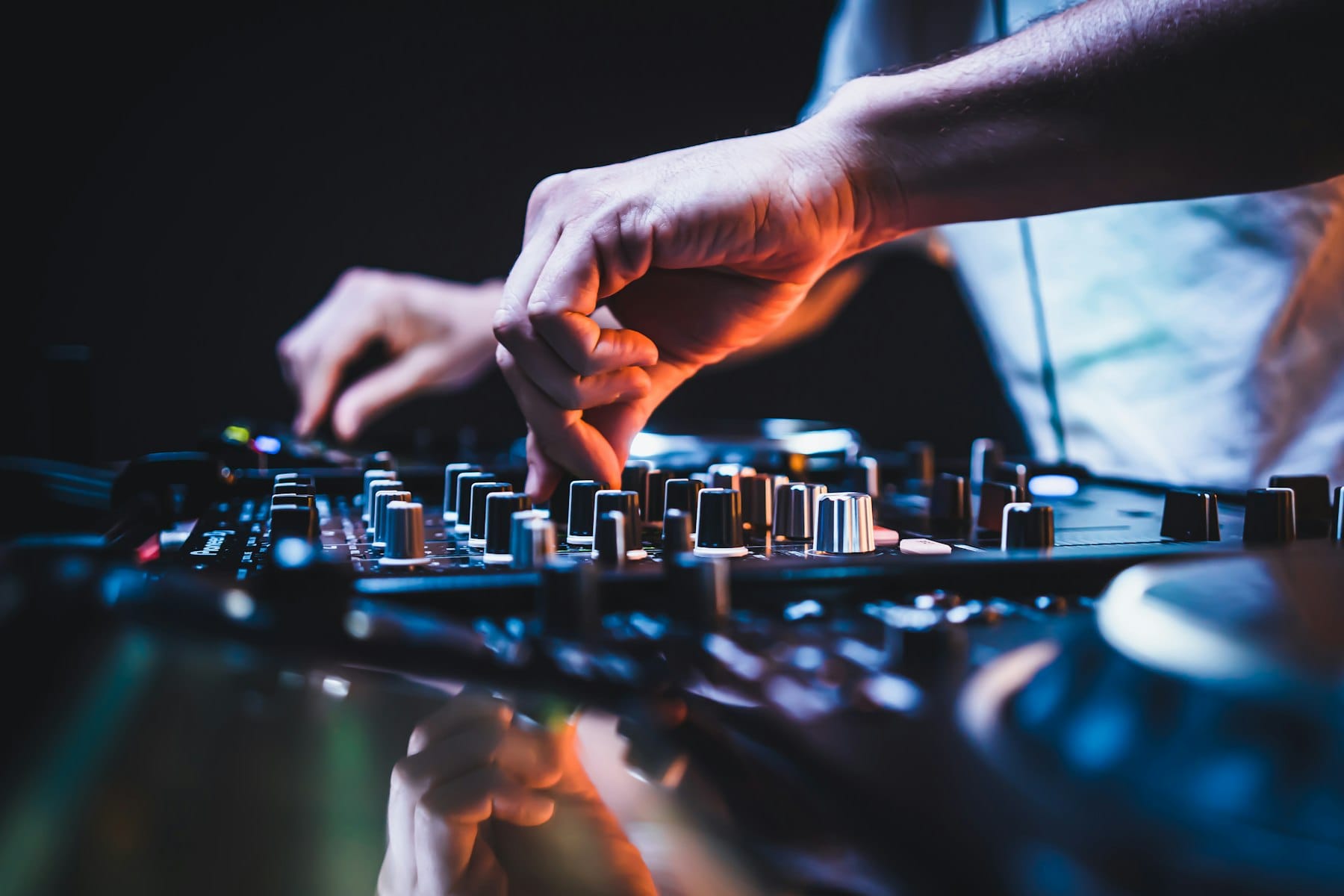
When people hear “yoga with a DJ”, many imagine a club night with mats on the floor. In practice, a good DJ set for yoga works almost the other way round. The goal is not to make the room peak, but to support breath, movement and attention for an hour or more.
So how does a DJ approach it? There is no single method, and every selector has their own taste. But some principles come up again and again when music is built around a practice rather than a dance floor.
The class is the map
A club DJ reads the crowd. A DJ playing for yoga reads the class. Before choosing a single track, it helps to understand the shape of the session: how it opens, where it builds, when it slows down and how it ends.
Most yoga classes follow a familiar arc:
- Arriving: settling in, first breaths, attention turning inwards
- Warming up: gentle movement to wake up the spine and joints
- Flow and effort: standing poses, sequences, the most active part
- Cooling down: slower poses, stretches, floor work
- Final rest: stillness, often lying down in savasana
The music follows this curve. Talking with the teacher beforehand, or knowing the style of the class well, makes a big difference. The DJ is not the main act here; the practice is.
Tempo: following the body, not the dance floor
Tempo is one of the most important tools. In a club, energy often comes from steady, fast beats. In yoga, a strong pulse can be helpful during flowing sequences, but the same beat can feel pushy when people are holding a pose or trying to slow their breathing.
That is why many DJs who play for yoga lean on genres like downtempo, ambient and organic electronic music. They offer rhythm without urgency. During the more active part, a gentle groove can give the movement a sense of flow. Towards the end, the beat often fades away entirely, leaving only pads, textures and space.
The change should feel natural. Sudden jumps in tempo or volume tend to pull people out of their body and back into their head.
Texture, space and the role of silence
Beyond tempo, a yoga set is built on texture. Warm basslines, soft synth pads, field recordings, acoustic instruments woven into electronic sounds: these create an atmosphere that people can rest in.
A few things many DJs try to avoid:
- Lyrics that grab attention, especially in a language people understand
- Harsh frequencies or very bright, aggressive sounds
- Big drops and build-ups designed for a dance floor
- Tracks that are too familiar, which can trigger memories and distract
Silence matters too. A moment with almost no sound, or just a low drone, can be as powerful as any track. It gives the room a chance to listen to the breath.
Mixing live: responding to the room
One reason a live set differs from a playlist is that it can respond. If the class runs longer in a standing sequence, the DJ can stretch that section. If the room feels tired, the music can soften earlier. If the teacher adds a moment of breathwork, the sound can make room for it.
This is where the craft lies: long, smooth transitions, attention to volume, and the patience to let a track breathe instead of changing it too soon. Many DJs who play for yoga mix more slowly than they would in a club, sometimes blending two pieces for several minutes.
Volume and the shape of the room
Volume deserves its own mention. Music for yoga generally sits lower than in a club, so that the teacher’s voice stays clear and people can hear their own breath. At the same time, low frequencies can be felt in the body, which is part of what makes live electronic sound special in a practice space.
Finding that balance means listening from the mat, not only from behind the decks.
The final rest
The last part of the set is often the most delicate. During savasana, the music may become little more than a soft wash of sound, then slowly fade. Some DJs end in near silence; others leave a quiet drone that gently brings people back.
How the set ends shapes how people leave the room. A calm, unhurried ending tends to stay with them for the rest of the day.
Want to explore the sound?
If you want to dig into the styles mentioned here, our guide to the best electronic music for yoga is a good place to start. You can also use these ideas to build your own playlist for practice at home: follow the arc of your session and let the music move with it.
Experience a live DJ set for yoga at an Electronic Yoga session, currently in Barcelona: get your tickets here. Wherever you are, you can listen to the Electronic Yoga set on SoundCloud.