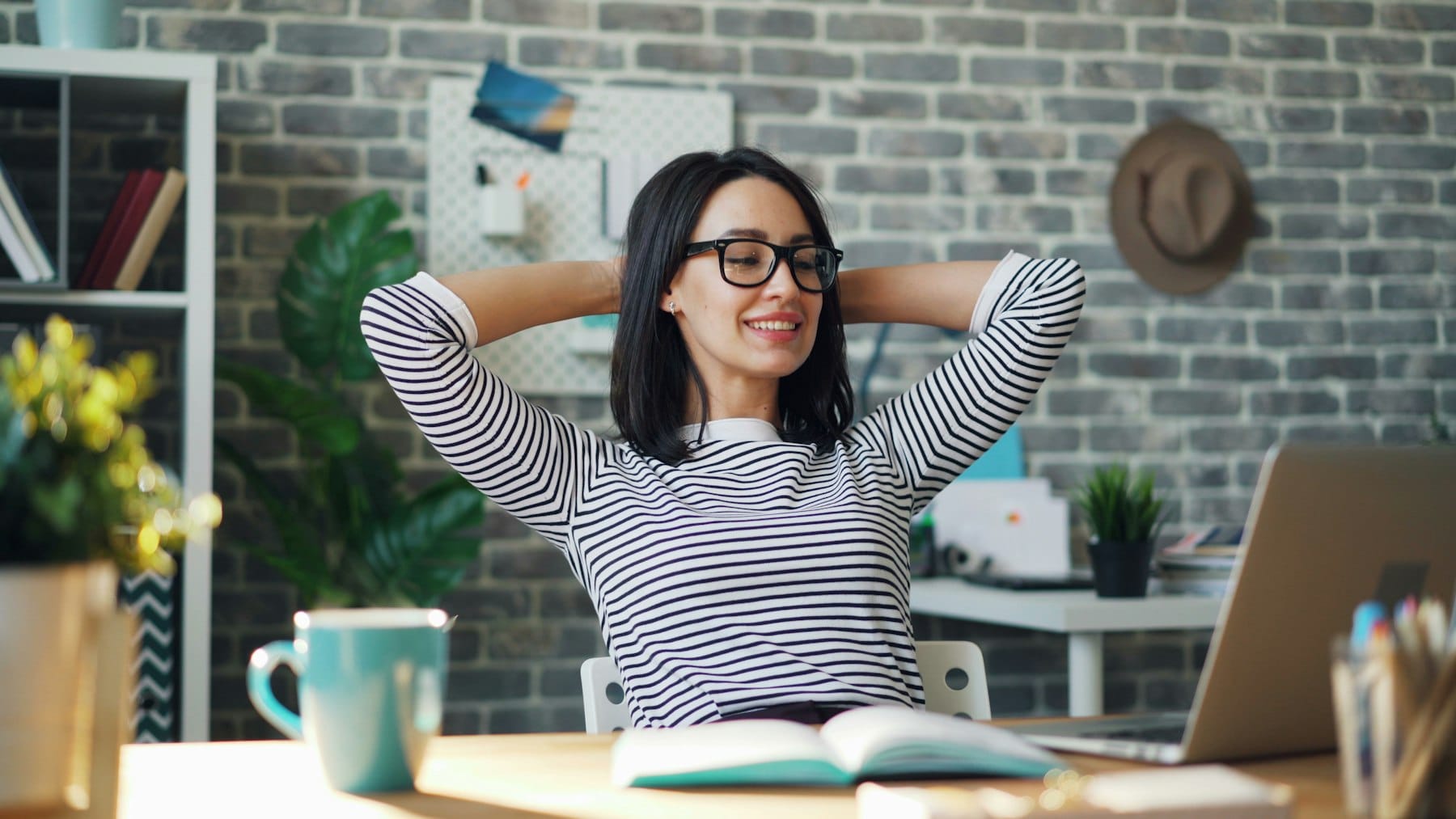
Most of us were not built to sit for eight hours, yet that is what many workdays look like. Screen, chair, keyboard, a quick lunch, more screen. By the evening the body often tells the story: a stiff neck, rounded shoulders, a tired lower back, hips that feel locked.
Yoga will not change your job. But it can give your body some of the movement that a day of sitting takes away, and help your attention come back from the screen.
What a day at the desk does to the body
Sitting is not harmful in itself. The problem is staying in the same shape for a long time. When we focus on a screen, we tend to lean forward, lift the shoulders and breathe higher in the chest without noticing.
Some common patterns:
- The head drifts forward and the neck works harder to hold it
- The shoulders round in and the chest closes
- The hip flexors stay shortened for hours
- The breath becomes shallow and fast
- The eyes stay locked at one distance
None of this is dramatic on a single day. It is the repetition that adds up, and the body usually feels it as stiffness and fatigue.
Small resets during the workday
You do not need a mat or special clothes to start. A few short breaks spread through the day can already make a difference in how you feel. Try one or two of these every hour or so:
- Neck release: sit tall, drop one ear towards the shoulder, breathe slowly for a few breaths, then switch sides
- Shoulder rolls: lift the shoulders up to the ears, roll them back and down, five or six times
- Seated twist: feet on the floor, turn gently from the waist, one hand on the back of the chair, then the other side
- Chest opener: interlace your hands behind your back, or hold the chair, and open the front of the shoulders
- Look far away: rest your eyes on something distant, through a window if you can, for a few breaths
Move gently and stay within what feels comfortable. The goal is to interrupt the posture, not to stretch as far as possible.
A short evening sequence on the mat
When the workday is over, a longer practice can help the body unwind more deeply. A simple sequence for desk workers might look like this:
- Child’s pose to let the back lengthen and the breath slow down
- Cat and cow to mobilise the spine in both directions
- Downward-facing dog to stretch the back of the legs and open the shoulders
- Low lunge on each side to open the front of the hips
- Sphinx pose for a gentle backbend that counters rounded shoulders
- Reclined twist to release the lower back
- Final rest lying on your back for a few minutes
Hips deserve special attention after long hours in a chair. If you want to go further, try our hip-opening sequence with slow music.
Why breathing matters as much as stretching
A long day of concentration often comes with a held or shallow breath. Stretching helps the muscles, but the breath is what tends to shift the overall state.
Try making the exhale a little longer than the inhale, without forcing. Research on breathing suggests that slower, longer exhales are associated with a calmer state, although everyone responds differently. Even a few rounds between meetings can feel like pressing a reset button.
The role of music
Music is a simple way to mark the line between work time and your own time. Slow, spacious electronic music, with a gentle pulse and no lyrics pulling at your attention, tends to suit this kind of practice well. It gives the movement a rhythm and makes it easier to stay with the body instead of drifting back to your inbox.
If you practise in the evening, have a look at our guide to yoga after work for ideas on how to close the day.
A few practical tips
- Set a reminder to stand up and move at regular intervals
- Keep a mat somewhere visible at home, so starting takes no effort
- Prefer short, frequent practice to one long session a week
- If something hurts, stop and ask a qualified professional
Consistency matters more than intensity. Ten gentle minutes most days tends to do more than an ambitious class you rarely get to.
Give your body a different rhythm
A day at the desk shapes the body in one direction. Yoga, breath and music offer the opposite: space, movement and a slower pace. It is a simple way to remind yourself that you are more than the person behind the screen.
Join a live Electronic Yoga session, currently in Barcelona: get your tickets here. Wherever you are, you can practise with the sound: listen to the Electronic Yoga set on SoundCloud.